
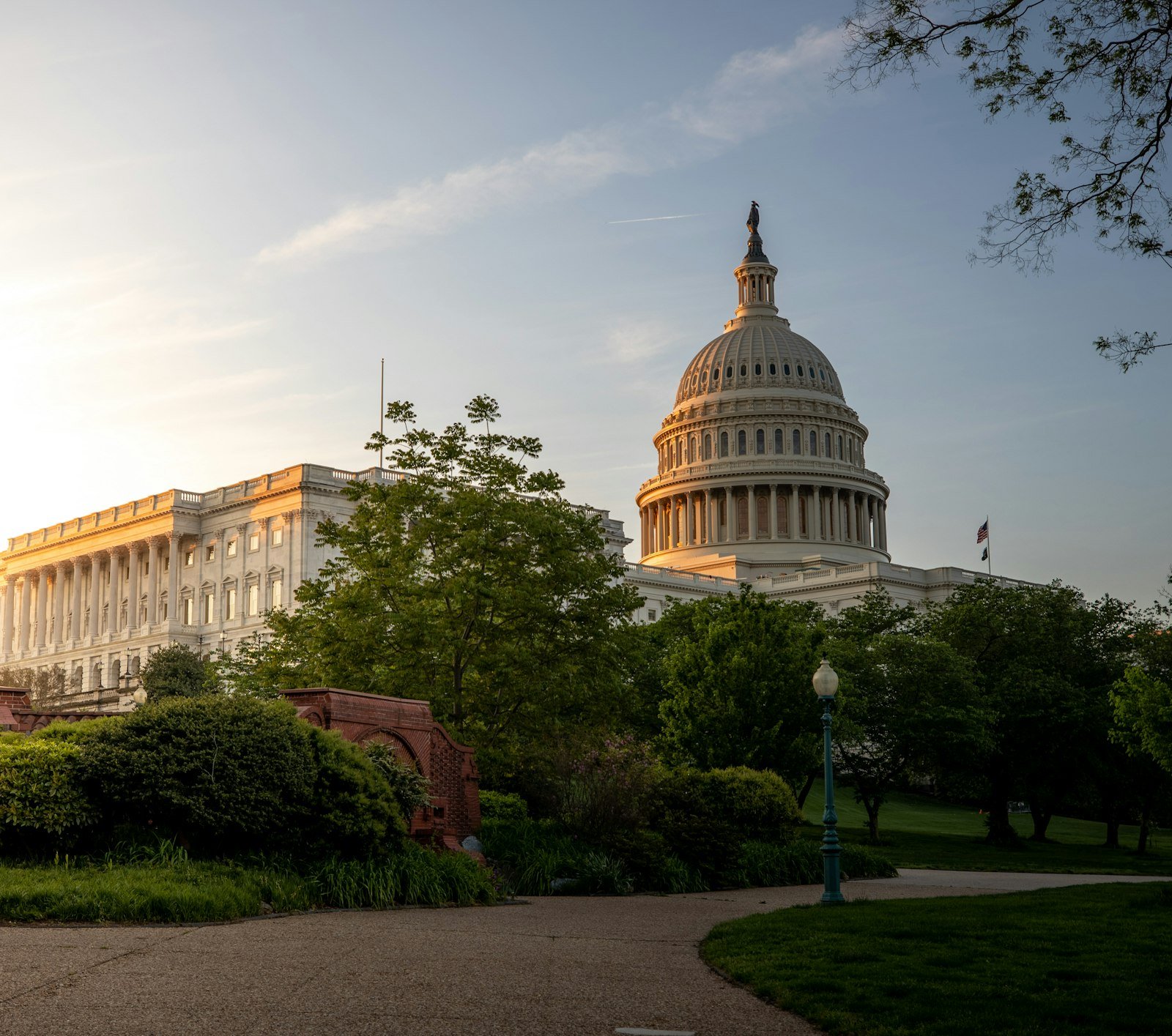
Democrats have won control of both chambers of the US Congress in Tuesday’s midterm elections, according to projections by CBS News and the Associated Press. By Wednesday morning, 4 November, markets had moved quickly to price in a new political reality: a divided government for the remaining two years of President Donald Trump’s term.
A decisive night
CBS News projected Democratic control of the Senate shortly after 11:30 pm Eastern time, with seats flipping in states including Texas, Ohio, North Carolina, Iowa, Kansas and Maine. The House followed, although around 75 races were still undetermined in CBS’s early-morning update. Exit polls put the president’s approval at 38%, and voters cited the cost of living, tariffs and high energy prices linked to the Iran war. AAA put the average US petrol price at $4.15 a gallon on Election Day, the highest for any Election Day on record.
President Trump congratulated Democrats and said he would accept the result and work with them, while warning that he would use his veto liberally.
How markets reacted
Investors read the outcome as gridlock, which several strategists described as historically supportive for equities. Dow futures were up 1,083 points, or 2.1%, at 8:45 am Eastern time, and S&P 500 futures were up 1.1%, while Nasdaq-100 futures recovered from an overnight low. The dollar slipped, Treasury yields fell and gold rose almost 3% in early trading. Oil eased, with Brent down 1.2% to $102.30 a barrel, pressured by signs of US–Iran diplomatic de-escalation.
The Georgian angle
For Georgia, the most immediate channel is energy prices. Geostat data released on Tuesday, 3 November, showed annual inflation rising to 5.9% in October from 5.6% in September, with transport prices up 21.9% year on year. Any sustained easing in oil would relieve that pressure, while a softer dollar matters for Georgian businesses that import or borrow in dollars. Beyond markets, a Democratic Congress is likely to bring greater scrutiny to foreign policy, including the conduct of the Iran war and US policy towards partners in the South Caucasus.
Why it matters for leaders
Political risk in Washington has shifted from the possibility of sweeping policy change to the probability of stalemate. For leaders in Georgia and the region, the practical questions are oil, the dollar and the direction of the Iran conflict. Businesses with exposure to fuel costs, dollar funding or US-linked trade should revisit their assumptions this week rather than wait for policy in Washington to settle.
Sources
- CBS News: 2026 midterm election results as Democrats decisively win control of House and Senate (4 November 2026)
- Stock Titan: Stock Market Today Live, November 4, 2026 (4 November 2026)
- TheStreet: Stock Market Today, Nov. 4, 2026 (4 November 2026)
- Trading Economics: Georgia inflation rate, October 2026 data (3 November 2026)
Photo: Andy Feliciotti / Unsplash